projects
model making
Aaron Pech
Oliver Mey
Sandra Beckert
The model making group within the MAMAgotchi project was responsible for material research, procurement, 3D printing, and the physical construction of models. Our primary objective was to translate the conceptual ideas developed by the individual room groups into tangible, functional prototypes. Acting as an interface between design concepts and their physical realization, we ensured that each spatial idea could be experienced in a material and interactive form.
Model Making: Rooms
The different stations of the project include a bedroom, a kitchen, a dance studio, and a playroom, translating themes such as motherhood, care work, and social images of mothers into a playful and accessible spatial experience through care-giving stations, including feeding, soothing, playing, and dancing.
For each of the four rooms, concepts were implemented and the required models are constructed. This is done, for example, through 3D-printing and woodworking. The integration of M5Stack components was considered throughout the process to ensure compatibility in the final setup.
Bedroom
For the bedroom, the work began with material research and familiarization with the 3D modeling software Shapr3D. A central task was adapting the design to fit M5Stack components while coordinating closely with the Visual Arts group regarding the representation of a sleeping Tamagotchi.
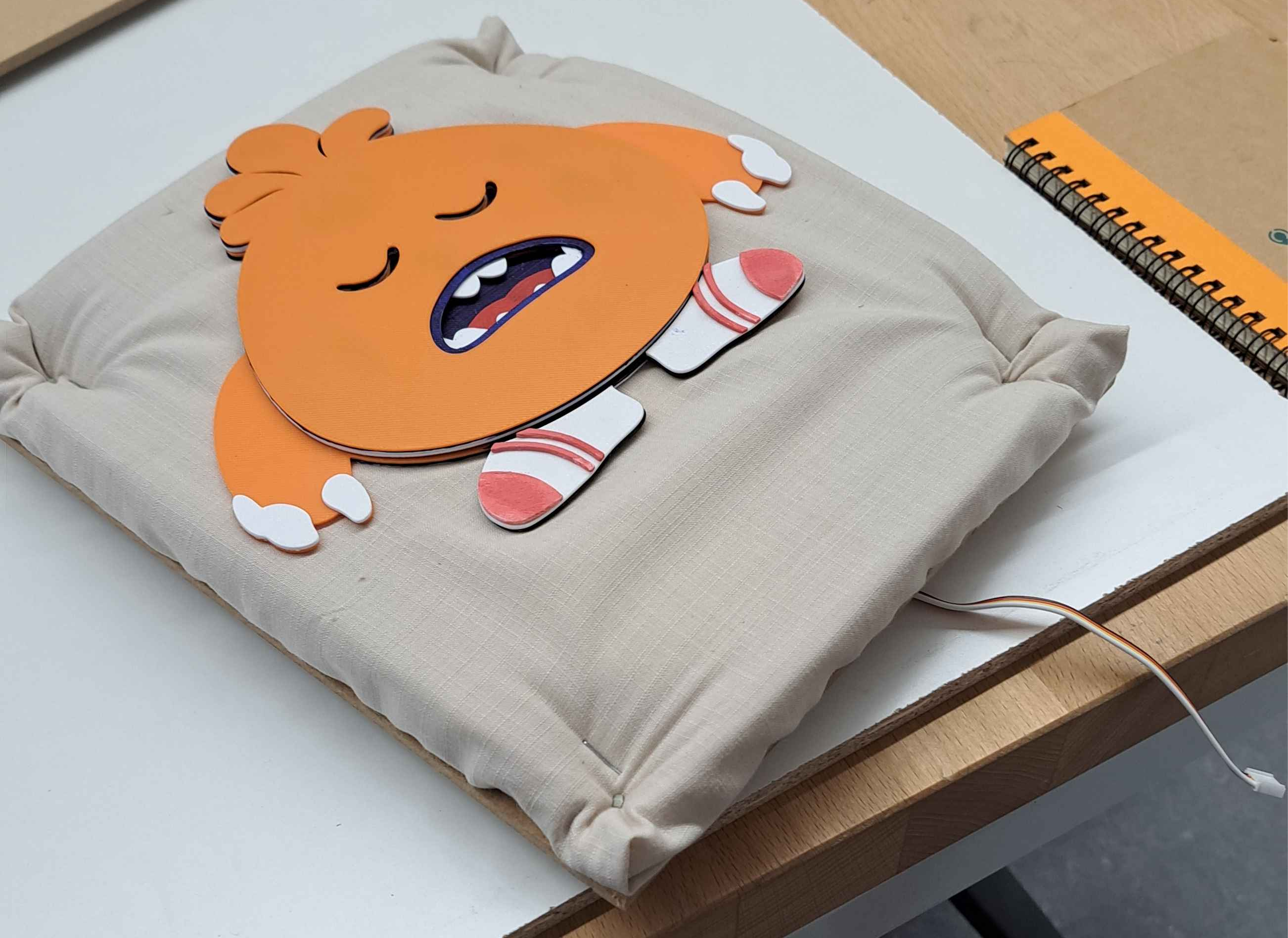
A 3D-printable bed model with several integrated functional features was devoloped: a recess on the back for a light control slider, channels for LED wiring, and a dedicated space for a Hall sensor. Additionally, a textile blanket was sewn and equipped with a embedded magnet to interact with the sensor system.
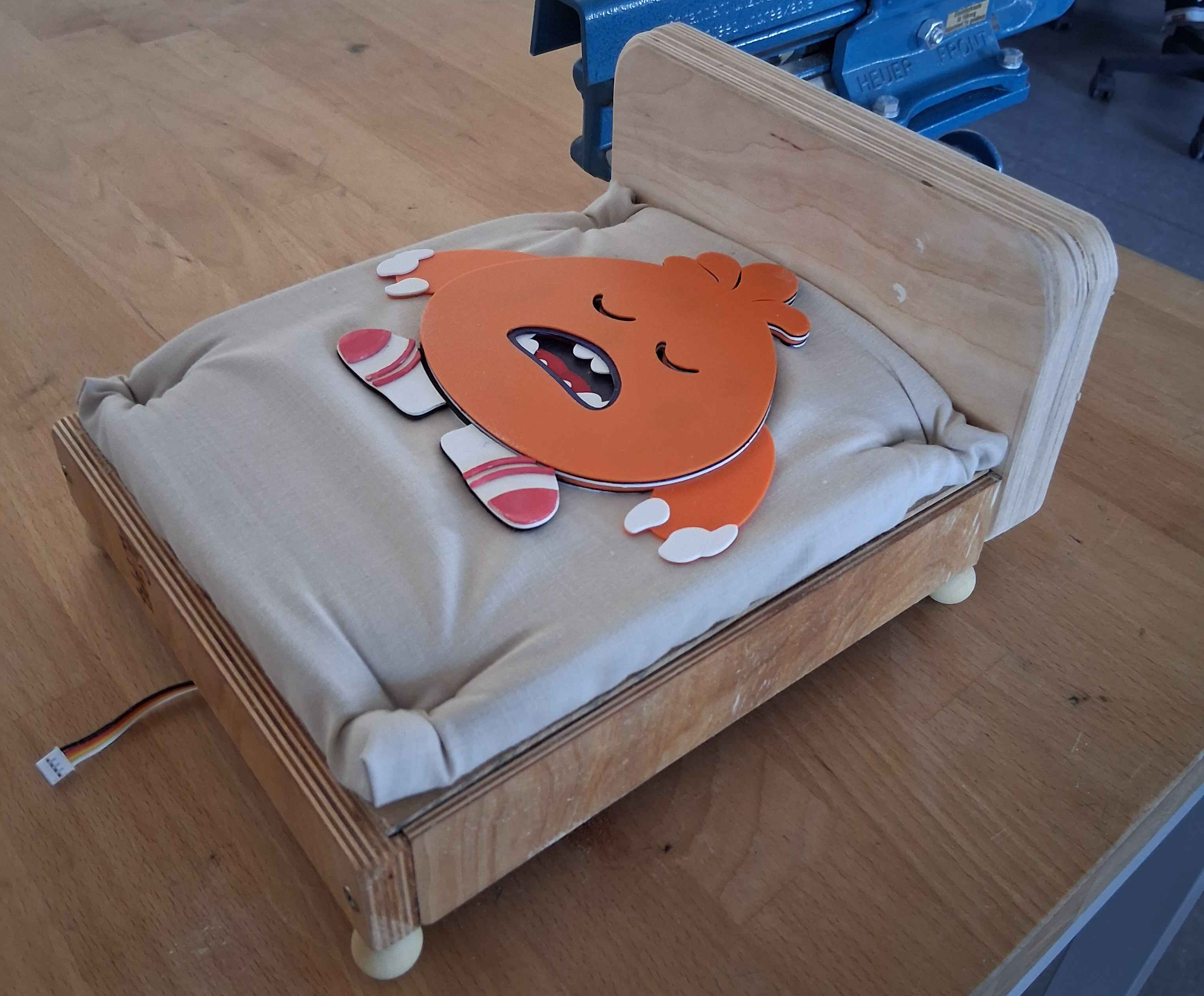
In a later stage, the design was changed into a wooden prototype, incorporating techniques such as milling, drilling, sawing and manual finishing. Leftover wood was reused for environmental sustainability. The wood was processed accordingly for the bed frame (including the sides, footboard, and headboard). A foam mat was cut to size for the mattress. Linen fabric was selected for the final bedding surface to enhance material authenticity. The foam mat was fixed onto a thin board using staple clips and then inserted into the bed frame. Wooden spheres were added as bed legs. The 3D-printed Tamagotchi, created by the Visual Arts group, was attached to the bed using superglue to prevent easy removal by children. Parts of the bed were also treated with furniture oil to improve their durability.
Further information about the station can be found in the station’s blog post.
Kitchen
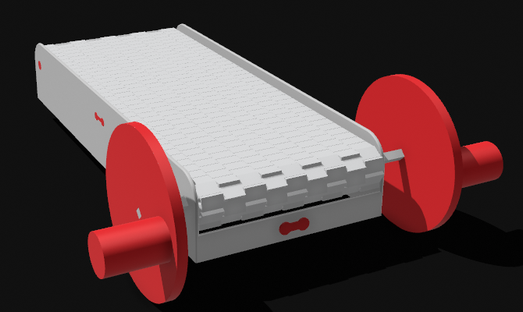
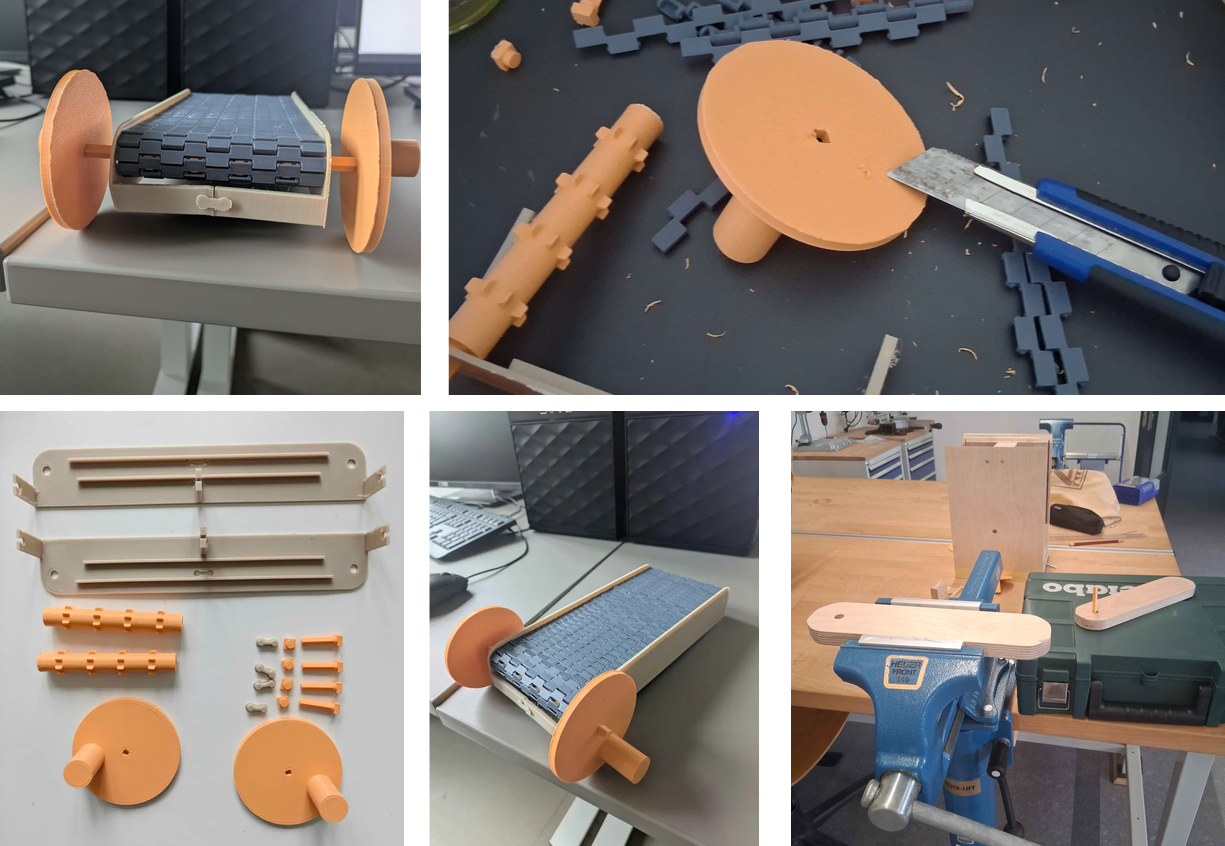
The kitchen required an in-depth understanding of its mechanical components. The main task was the development of the conveyor mechanism with 3D-printing.
Due to initial quality issues, multiple iterations were necessary. Adjustments were also made manually using cutting tools to achieve the required fit and functionality. The finalized component was then integrated into the overall kitchen model.
Further information about the station can be found in the station’s blog post.
Dance Studio
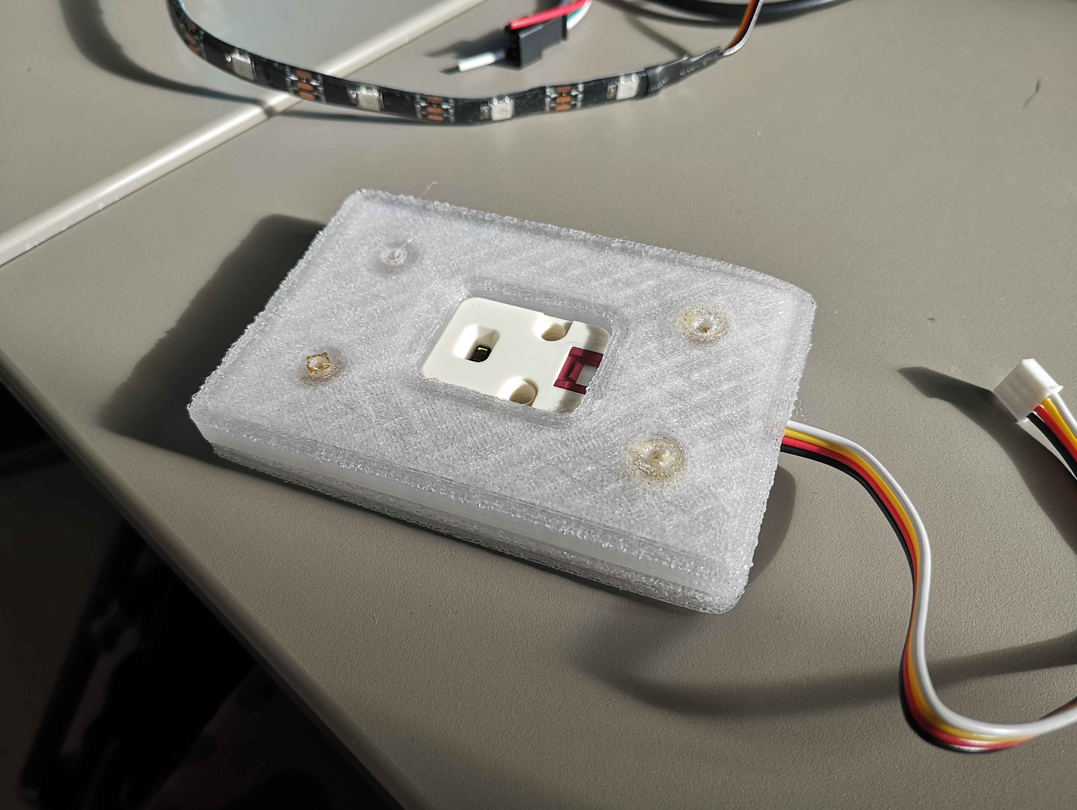
The dance studio required the development of stepping plates. A model was created in Shapr3D and subsequently 3D-printed. In total, six stepping plates for integrated LED feedback were designed. These plates included internal channels for wiring and dedicated spaces for sensors. Transparent PET was used as 3D-printing material to make the LED lighting visible.
Following initial prototyping, the design was iteratively refined based on testing and feedback. Key improvements included widening LED channels, modifying sensor integration (switching from light sensors to ToF sensors), reducing dimension to reduce material usage. For example the plates meassurments where reduced from 20 x 30 cm to 6,66 x 10 cm. Anti-slip mats were incorporated beneath the stepping surfaces to ensure user safety.
First, the threads were glued in place with hot glue. The glue then ended up inside the threads, which rendered them unusable. The solution was to remove threads and glue. Threads were then built in using a soldering iron. Additionally, the Visual Arts Group helped with the production of a 3D-printed CD player component utilizing their private 3d-printer, enabling music playback triggered through NFC chip recognition.
Further information about the station can be found in the station’s blog post.
Playroom
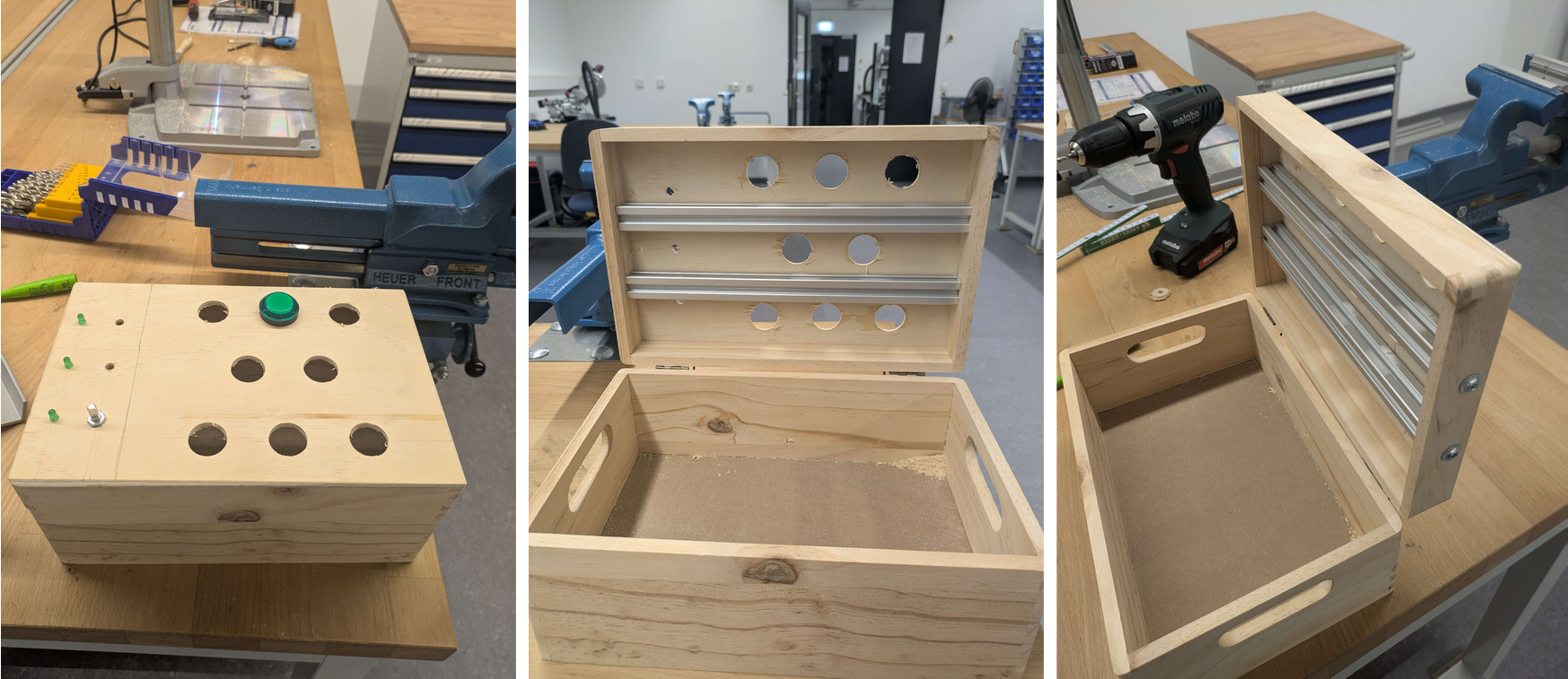
For the playroom, a wooden box was used as the primary structural element. The challenge lay in the precise spatial arrangement of components within limited space, as drilling errors could not be corrected. A technical drawing guided the placement of LED buttons, lighting elements, power connections, and mounting points.
Holes were drilled into the lid of the box to accommodate the components. To ensure structural stability, aluminum profiles were integrated into the lid construction. Additional materials included LEDs, spacers for a Raspberry Pi, and an anti-slip-mat. The result was a compact yet robust interactive unit.
Further information about the station can be found in the station’s blog post.
Outlook and Future Work
The work of the model making group demonstrates the importance of iterative prototyping and collaboration in the development of interactive exhibition concepts. Communication between the different groups and interface teams is essential. Future steps include further refinement of prototypes and durability testing.
Disclosure Statement
This text was prepared with the assistance of the AI language model GPT-5.4, which was used for drafting and linguistic revision. The author defined the content requirements and remains responsible for the final version.