theory
design methods for tangible interaction
Lisa-Marie Müller
Weixi Song
Sophia Katrin Reutner
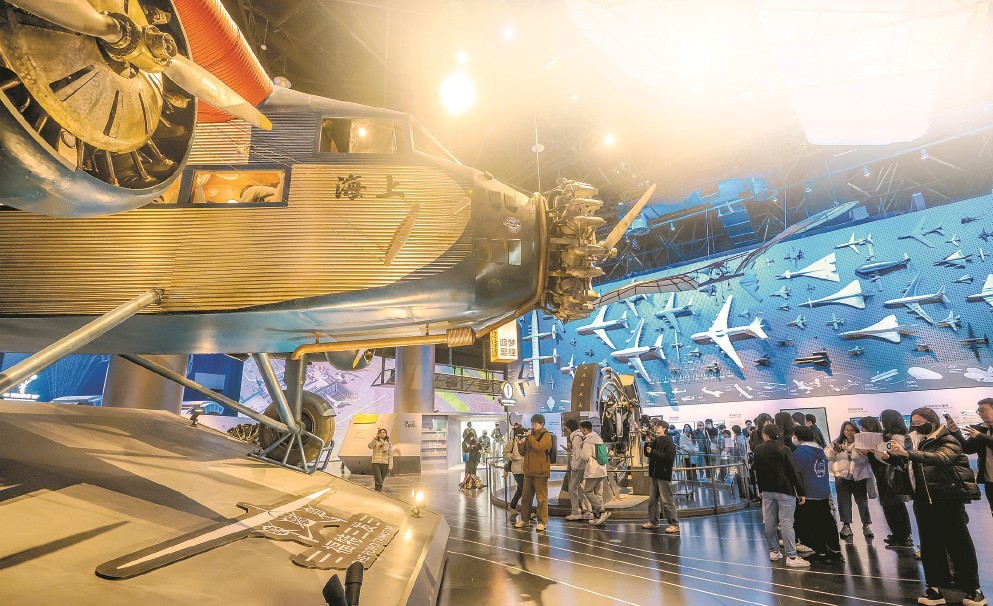
Figure 1: Interactive exhibition space used as an example for spatial and bodily visitor interaction.(Shanghai Science and Technology Museum. (2026))
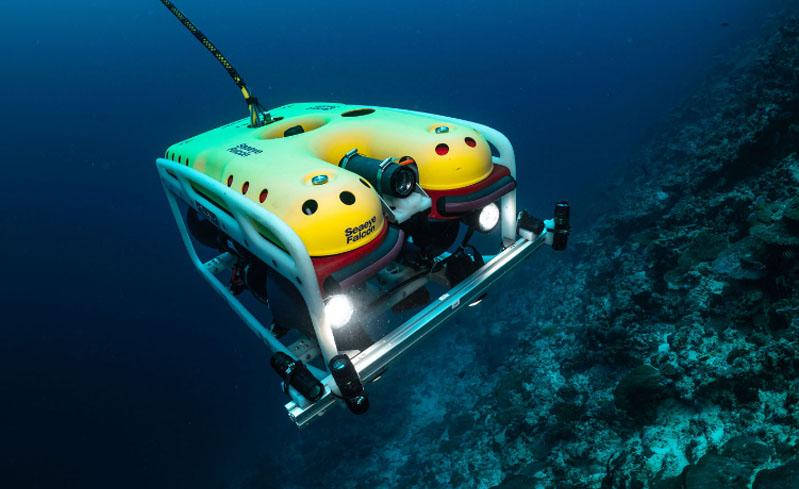
Figure 2: Remotely Operated Vehicle.(benaoptics. (2026). The Role of ROVs in Underwater Exploration and the Importance of High-Precision Optics)
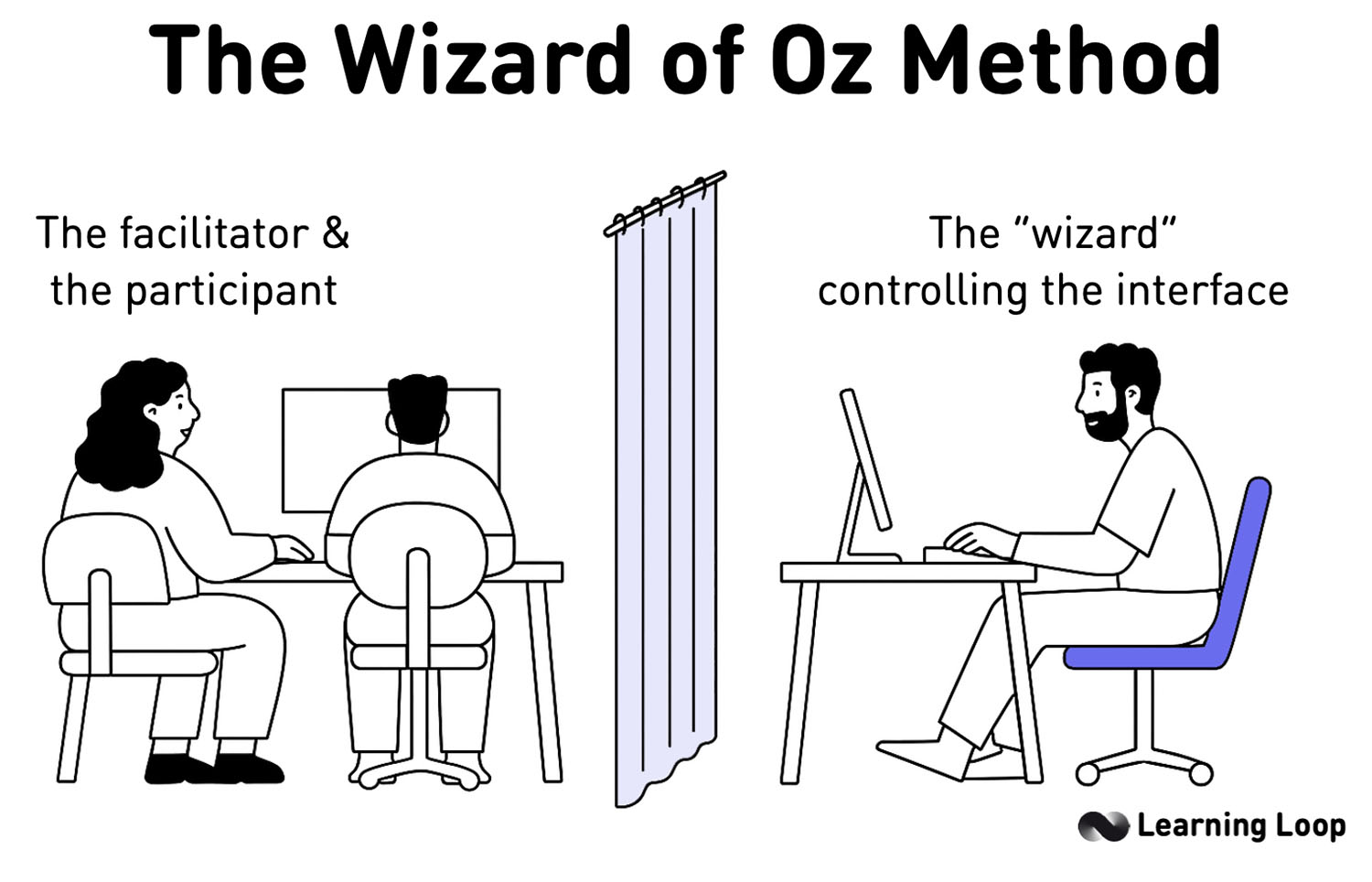
Figure 3: Wizard of Oz Experiment. (Learning Loop. (2026). Wizard of Oz.)
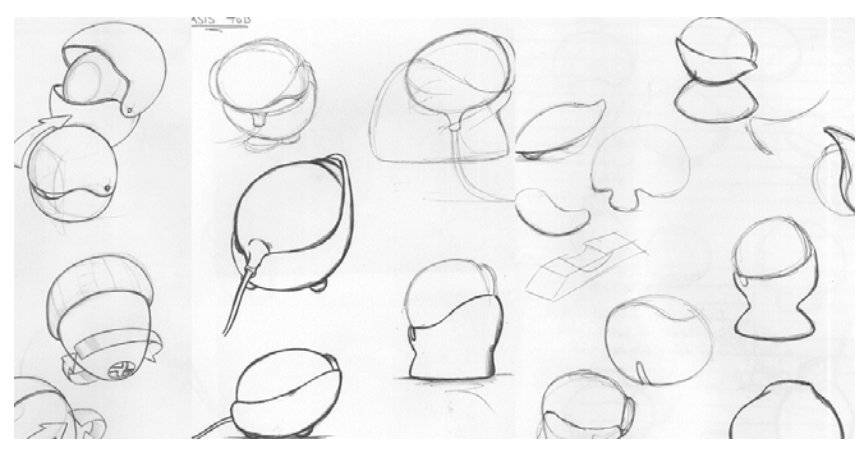
Figure 4: Early organic form sketches. (Feltham, F. et al. (2007). Designing tangible artefacts for playful interactions and dialogues)
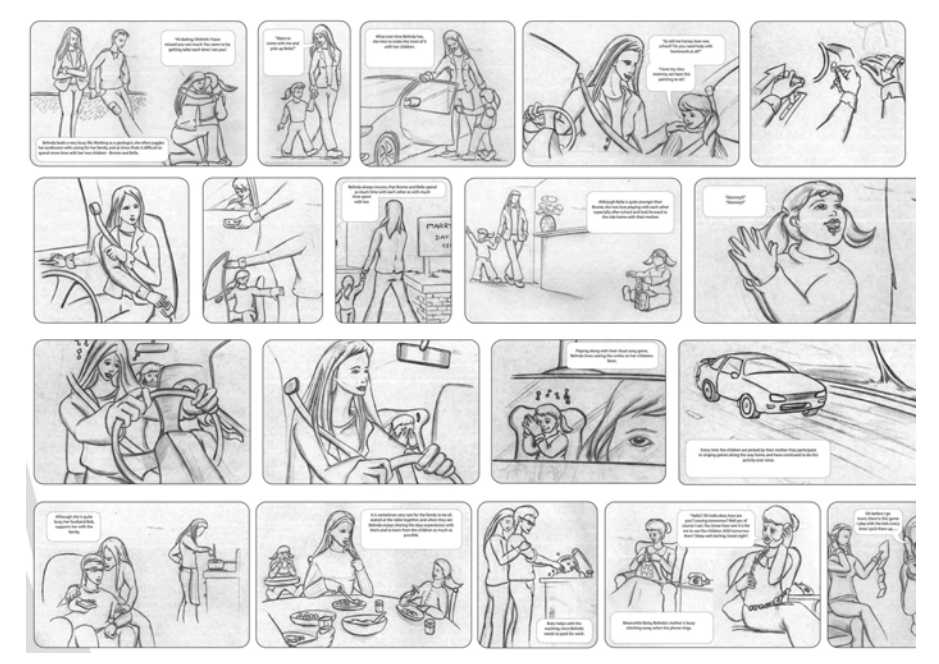
Figure 5: Section of Visual Scenario. (Feltham, F. et al. (2007). Designing tangible artefacts for playful interactions and dialogues)
Which design methods are particularly suitable for tangible and spatial interaction?
23.06.2026
Motivation
Designing tangible and spatial interaction systems poses challenges that differ significantly from traditional graphical user interface (GUI) design. In tangible interaction, users engage with physical objects, materials, body movements, and spatial environments rather than solely with screens. As a result, designers must understand not only cognitive processes but also embodied experiences, material properties, and contextual factors. To address these challenges, specialized design methods have emerged that support the exploration, testing, and refinement of tangible and spatial interaction concepts. Methods such as Research through Design, Bodystorming, Experience Prototyping, and Co-Design help designers gain deeper insights into how people interact with physical artifacts and spaces, ultimately leading to more intuitive and meaningful user experiences. This paper asks which design methods are particularly suitable for tangible and spatial interaction, and how these methods differ from classical interface design processes.
Main Design Methods
Research through Design (RtD)
Research through Design is a central approach in tangible interaction research. Rather than treating design as a final outcome, RtD views the design process itself as a means of generating knowledge. Designers create and iteratively refine prototypes while simultaneously investigating new interaction possibilities and design principles. This approach is particularly valuable for tangible interaction because it enables the exploration of materiality, bodily engagement, and spatial experiences. Knowledge is generated through making, testing, and reflecting on artifacts. The outcomes are often design concepts, frameworks, or principles rather than traditional experimental results. The quality of RtD can be evaluated through four lenses: the transparency of the design process, the novelty of the invention, its relevance to the field, and the extent to which future work can build upon the generated knowledge. This is important for tangible interaction because material qualities and bodily experiences often only become visible when a prototype is actually built and tested. (Zimmerman, J. et al, 2007)
Bodystorming
Bodystorming is an ideation method that emphasizes physically experiencing a situation from the user’s perspective. Instead of discussing ideas abstractly, designers act out scenarios within realistic environments. The method helps participants understand spatial, temporal, cognitive, and emotional aspects of user experiences. By immersing themselves in the context of use, designers often discover needs and challenges that would remain hidden in conventional brainstorming sessions. Bodystorming is especially useful during the early stages of a project when user requirements and contextual factors are not yet fully understood. For tangible and spatial interaction systems, it allows designers to identify issues such as restricted movement, awkward gestures, or environmental constraints before building functional prototypes. This makes the method useful when designers need to understand movement, posture, distance, and spatial limitations. (Oulasvirta, A., 2003), (Grumpelmaler-Mach, W., 2019)
Example: During the redesign of the interactive exhibition hall “Light of Discovery” at the Shanghai Science and Technology Museum, the design team reconstructed the exhibition space at a 1:1 scale using simple materials. Designers, children, and parents then physically enacted the visitor experience by walking through the hall, interacting with exhibits, and exploring different movement paths. This bodystorming process helped identify spatial and interaction-related issues early in the design phase. This example shows how bodystorming can make spatial movement, visitor behavior, and interaction problems visible before the final implementation.
Experience Prototyping
Experience Prototyping focuses on creating representations that allow designers and users to experience how interaction with a product, space, or system might feel. These prototypes may include aspects such as weight, texture, material quality, and physical feedback. According to Buchenau and Suri, an experience prototype can be any representation that helps people understand, explore, or communicate a future interaction experience. The method serves three main purposes: understanding existing user experiences and contexts, exploring and evaluating design ideas, and communicating concepts to stakeholders. Because tangible interaction heavily relies on physical qualities and sensory experiences, Experience Prototyping is particularly effective for evaluating how users perceive and interact with artifacts in realistic situations. It helps designers test not only functionality, but also how an interaction feels. These prototypes do not have to be technically complete. Even simple materials such as cardboard, foam, paper, or everyday objects can be used to test size, weight, movement, and feedback. (Buchenau, M., 2000)
Co-Design
Co-Design actively involves end users in the design process. Instead of designing for users, designers collaborate with them to develop solutions together. Participants contribute their experiences, needs, and ideas throughout the development process. Workshops often use simple materials such as paper, cardboard, or modeling tools to enable participants without design expertise to create and communicate their ideas. For tangible interaction, Co-Design is especially valuable because physical interaction patterns and preferences vary greatly among users. Direct involvement helps ensure that resulting designs align with users’ natural behaviors and expectations. This is useful because users often interact with physical objects in ways that designers may not expect. For example, in a co-design workshop, users could arrange cardboard objects, wooden blocks, or paper interfaces to show how they would naturally interact with a tangible system. (Grumpelmaler-Mach, W., 2019)
Wizard-of-Oz Prototyping
Wizard-of-Oz is a research and prototyping method in which users interact with a system that appears to operate autonomously, while parts of its functionality are controlled by a hidden human operator. The name originates from The Wizard of Oz, where the seemingly powerful wizard is revealed to be an ordinary person operating machinery behind a curtain. The method is commonly used to simulate digital or intelligent system behavior before the underlying technology has been implemented. This allows designers to evaluate interaction concepts, user expectations, and usability without investing in costly development. A typical Wizard-of-Oz study involves three roles: the user, who interacts with the prototype; the wizard, who secretly controls the system responses; and a moderator, who guides the study and observes participants. The process begins by defining which functionality should be tested and how it can be realistically simulated. Designers then create a prototype, specify possible system responses, and document the setup in a study protocol. Before testing with users, the wizard should be trained and pilot runs should be conducted to ensure consistent behavior. For tangible systems, this method is helpful when sensors, reactions, or intelligent behavior are still too expensive or difficult to implement. (Bernsen, N.O. et al., 1994), (Design Thinking Methods, 2026), (Schlögl, S. et al., 2014)
These methods can be understood as complementary rather than separate. Bodystorming is useful at the beginning of the process because it helps designers understand movement, space, and context. Co-Design brings users into the process and reveals their everyday habits and expectations. Experience Prototyping then makes early ideas physically testable. Wizard-of-Oz can simulate technical behavior before the system is fully implemented. Research through Design connects these steps by reflecting on the knowledge generated through making, testing, and improving prototypes. Differences from Classical Interface Design Traditional interface design mainly focuses on screen-based interactions and information presentation. In contrast, tangible interaction design emphasizes the relationship between physical objects, body movements, materials, and spatial environments. As a result, the design process differs in several ways: Physical artifacts and prototypes play a central role throughout development. User testing must often occur in realistic environments rather than laboratory settings. Material properties, ergonomics, and embodied experiences become key design considerations. Iterations are typically more time-consuming because physical prototypes need to be built and refined. While classical interface design aims to optimize task efficiency and screen usability, tangible interaction design seeks to create meaningful, intuitive, and embodied experiences.
Design Artifacts
A variety of artifacts are created during the design process of tangible interaction systems. These include:
- Sketches and conceptual drawings
- Storyboards and usage scenarios
- Physical mock-ups and prototypes
- Bodystorming enactments
- Wizard-of-Oz simulations
- Experience prototypes
- Videos and documentation of user interactions
- Design frameworks and principles derived from the process
These artifacts are important because they help designers document physical experiences that cannot be fully captured in written descriptions. Videos, photos, sketches, and prototypes make bodily and spatial interaction easier to discuss and evaluate. Unlike commercial product development, the primary goal of many tangible interaction research projects is not only to create a functional artifact but also to generate transferable knowledge for future research and design practice.
Limitations of the Methods
These methods also have limitations. Bodystorming can feel artificial if the simulated situation is not realistic enough. Experience prototypes may not fully represent the final technical system. Co-Design results need interpretation, because user ideas cannot always be directly transformed into final design solutions. Wizard-of-Oz testing also depends on the consistency of the hidden operator. If the simulated reactions are too slow or unrealistic, the test results may be misleading. In conclusion, tangible interaction design requires methods that make physical, spatial, and embodied experiences visible. Methods such as Bodystorming, Experience Prototyping, Co-Design, Wizard-of-Oz, and Research through Design help designers move from abstract ideas to testable physical experiences. Compared with classical interface design, the focus shifts from screens and visual usability to bodies, objects, materials, and real contexts. In this way, tangible interaction concepts are developed through repeated cycles of making, testing, observing, and refining.
References
Bednar, P.M., Welch, C. (2009). Contextual Inquiry and Requirements Shaping. In: Wojtkowski, W., Wojtkowski, G., Lang, M., Conboy, K., Barry, C. (eds) Information Systems Development. Springer, Boston, MA. https://doi.org/10.1007/978-0-387-68772-8_18
Benaoptics. (2026). The Role of ROVs in Underwater Exploration and the Importance of High-Precision Optics. https://www.benaoptics.com/blog/the-role-of-rovs-in-underwater-exploration-and-the-importance-of-high-precision-optics.html
Bernsen, N. O., Dybkjær, H., & Dybkjær, L. (1994). Wizard of oz prototyping: How and when. Proc. CCI Working Papers Cognit. Sci./HCI, Roskilde, Denmark, 67.
Design Thinking Methods. (2026). Wizard of Oz Testing. https://designthinking-methods.de/en/5Testen/wizardofOzTE.html
Marion Buchenau and Jane Fulton Suri. (2000). Experience prototyping. In Proceedings of the 3rd conference on Designing interactive systems: processes, practices, methods, and techniques (DIS ‘00). Association for Computing Machinery, New York, NY, USA, 424–433. https://doi.org/10.1145/347642.347802
Mittelstand-Digital Zentrum Fokus Mensch. (2026). Contextual Inquiry (Kontextuelles Interview). https://www.digitalzentrum-fokus-mensch.de/definition/contextual-inquiry-kontextuelles-interview
Oulasvirta, A., Kurvinen, E., & Kankainen, T. (2003). Understanding contexts by being there: Case studies in bodystorming. Personal and Ubiquitous Computing, 7, 125–134.
Schlögl, S., Doherty, G., Luz, S. (2014). Wizard of Oz Experimentation for Language Technology Applications: Challenges and Tools. https://arxiv.org/html/2402.14563v1#:~:text=However,%20the%20technology%20at%20hand%20is%20not,applications%20to%20be%20evaluated%20with%20real%20users
Zimmerman, J., Forlizzi, J., & Evenson, S. (2007). Research through design as a method for interaction design research in HCI. Proceedings of CHI 2007, 493–502.
Shanghai Science and Technology Museum. (2026). Light of Discovery. https://group.sstm.org.cn/article/56944213/33
MSG Desig. (2026). Ideenfindung, Bodystorming. https://designthinking-methods.de/3Ideenfindung/bodystorming.html
Grumpelmaler-Mach, W. (2019). Was ist Co-Design? - Einführung in kollaboratives Gestalten. https://creativeregion.org/2019/03/was-ist-co-design-einfuehrung-in-kollaboratives-gestalten
Learning Loop. (2026). Wizard of Oz. https://learningloop.io/plays/wizard-of-oz
Feltham, F. Vetere, F., Wensveen, S. (2007). Designing tangible artefacts for playful interactions and dialogues. https://doi.org/10.1145/1314161.1314167
Disclosure Statement
This text was prepared with the assistance of the AI language model GPT-5.3, which was used for drafting and linguistic revision. The authors defined the content requirements and remain responsible for the final version.